
Health & Legal Risks of Unsanitary Housing: How to Act Fast
A home in poor condition (damp, mold, pests, lead, lack of water or safety) endangers the health of occupants (adults and children) and can trigger the liability of the owner / landlord. This guide explains the health risks, legal remedies (city hall, prefect, building manager, condominium), mandatory works, rehousing and procedure timelines.
Get an assessment & cleaning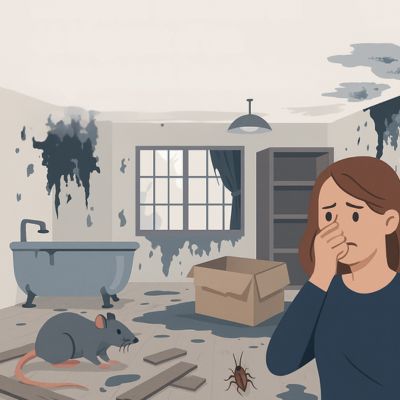
What is “unsanitary housing”?
Unsanitary housing refers to a dwelling or building that presents obvious risks to the health and safety of occupants: severe damp, mold, pests, lack of essential equipment (water, ventilation), dangerous installations, lead exposure, accumulation (e.g., Diogenes syndrome/hoarding), or structural defects. The condition of the premises may require urgent repairs, an occupation ban, a danger order and rehousing.
Public health regulations govern the procedure for unsanitary housing. Such cases may trigger administrative measures (city hall, prefect), obligations for the owner/landlord, and rights for the tenant (rent reduction, works, suspended payments, rehousing depending on the situation).
Main Health Risks
- Mold & damp: respiratory issues, allergies, asthma, impact on mental health (anxiety).
- Pests (rats, cockroaches, bed bugs): infections, bites, soiling—require deep cleaning and sanitary treatments.
- No water, poor ventilation: microbial growth, intoxication risks, foul air.
- Lead (old paint): poisoning risk, especially for children.
- Electrical / heating defects: burns, fire, carbon monoxide.
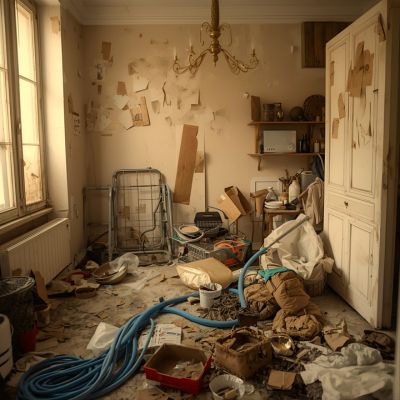
- Extreme accumulation (unsanitary hoarding/Diogenes): falls, compromised safety, contamination.
Risks concern occupants and sometimes neighbors in the building (common areas, condominium, building manager).
Legal Obligations & Responsibilities
Owner / Landlord
- Provide a decent home (safety, salubrity, essential equipment).
- Carry out repairs: treat mold and pests, fix water and electrical issues.
- Comply with administrative orders (unsanitary order, occupation ban, financial penalties).
- Provide rehousing if occupation becomes impossible (per the regulations and the prefect’s order).
Tenant / Occupants
- Report issues to the owner and keep a record (photos, statements, certificates).
- Notify city hall, the housing agency, and the condominium/manager if common areas are affected.
- Request an unsanitary procedure; in danger, authorities can order works, make the place safe, and require rehousing.
- Depending on decisions: rent adjustments, payment deferrals, suspension of occupation of the premises.
Administrative Procedure: City Hall, Prefect, Manager, Condominium
- Report to city hall (health department) or via a housing agency; attach evidence of the dwelling’s condition.
- Inspection and technical report; the owner/landlord and, if needed, the building manager are notified.
- Order from the prefect (or mayor): occupation ban, danger order, penalty, deadline for works, rehousing.
- Follow-up: control of works, safety measures, lifting the order once compliant.
Note: in serious breaches, the owner may be sanctioned (penalties, prosecution). A tenant is not required to remain in unsanitary housing and may request rehousing assistance.
From Risk to Action: What to Do
| Risk / Sign | Immediate Action | Responsible |
|---|---|---|
| Damp walls, mold | Air out, report, assessment, repairs to waterproof/ventilate | Owner / landlord |
| Pests (cockroaches, rats) | Pest control, reinforced cleaning | Owner (per lease) / Manager |
| Lack of water / dangerous installations | Report to city hall, initiate unsanitary procedure | City hall / prefect |
| Lead (paint) | Diagnostics, safe works, protect children | Owner |
| Extreme accumulation (hoarding) | Clear-out, specialized cleaning, disinfection | Specialist + Owner |
Operational Solution: Cleaning & Disinfection (Unsanitary / Extreme)
Défi Clean handles unsanitary dwellings: deep cleaning, removal, sanitary treatments, disinfection, pest control, restoration. We work in any building, studio or house, in line with procedures, with documentation, and coordination with city hall, the prefect, agencies or the building manager. If occupation is suspended or banned, we prepare a safe return to healthy premises.
Need a fast on-site diagnosis (24–48h) and a free quote? Contact us.
FAQ — Health & Legal Risks
What are the main health dangers in unsanitary housing?
How can I tell if my home is unsanitary?
What steps should I take to report unsanitary housing?
What legal remedies exist against a negligent owner?
Essential Resources
 Main Guide
Unsanitary Home Cleaning
Deep cleaning of unsanitary homes and extremely dirty apartments.
Read the article →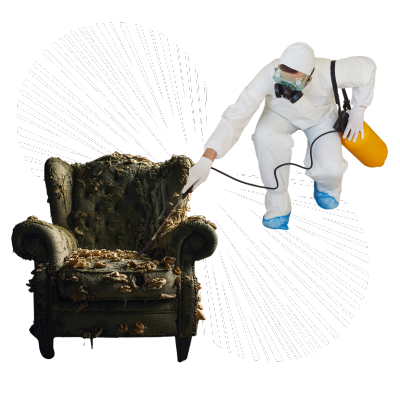 Understanding
Clear-out & Disinfection After Unsanitary Conditions
All steps of a full clean (disinfection, pest control, deodorization).
Read the article → ⚠️ Key Info
Aids & Subsidies for Unsanitary Cleaning
Overview of schemes from CAF, local authorities, city halls and insurers.
Read the article →