Guide • Procedure & Protocols
Post-Death Cleaning Procedure – Steps & Protocols
Post-death cleaning is a highly sensitive intervention. It is not just about making a place look clean: the area must be secured, odors treated, waste managed, and the risk of contamination reduced. Proper disinfection and decontamination are essential to restore the premises safely.
In this guide: the key steps of the protocol, recommended techniques and products, management of contaminated objects and materials, and information about pricing and obtaining a quote. Informal tone — serious about safety.
Request a quote Fast response
Why a strict protocol is essential
After a death, certain fluids and residues may make a location potentially infectious. These may contain biological agents and possible pathogens. Without proper disinfection and decontamination, the risk of contamination increases, along with persistent odors and damage to materials.
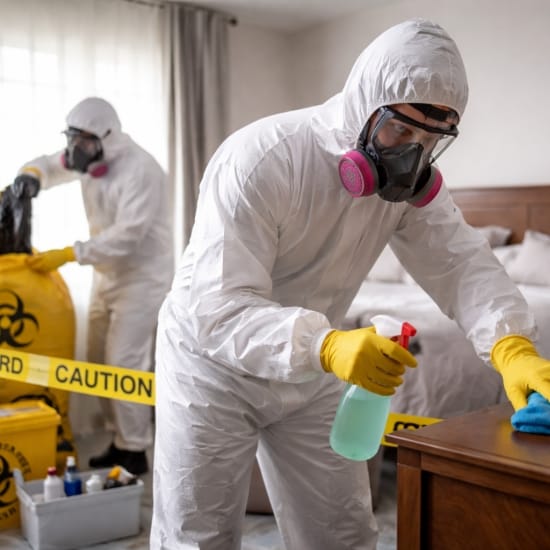
A specialized company follows strict protocols with a trained team: protective equipment, secured zones, proper waste management, and safe elimination. The goal is to leave the property truly clean and safe.
Key steps in post-death cleaning
1) Secure the area and protect the team
The area is isolated and access controlled. Protective equipment (gloves, suits, masks, eye protection) ensures maximum safety.
2) Assessment of premises and surfaces
Every situation is different: apartment, house, confined space, ventilation conditions. All affected surfaces, fragile materials, and porous elements are evaluated.
3) Sorting and waste management
Contaminated objects are isolated. Waste is handled and removed according to safety procedures, ensuring controlled elimination.
4) Technical cleaning
The initial cleaning phase removes visible traces and residues. This technical step prepares for full disinfection.
5) Disinfection and decontamination
Approved disinfectants are applied with proper contact time. Targeted decontamination reduces biological agents and limits infectious risk.
6) Odor treatment
Persistent odors are neutralized and controlled, improving the overall condition of the space.
7) Final inspection and restoration
A final check ensures surfaces, materials, and protocols have been respected. Recommendations are provided based on the property’s condition.
Regulations & Compliance (Belgium)
Legal requirements may vary depending on the region and the type of waste involved. In Belgium, it is advisable to rely on a specialized company familiar with waste elimination, safety rules, and documentation when required.
Cost, quote & insurance
The cost of post-death cleaning depends on the size of the area, the level of decontamination, odor treatment, damaged materials, and required services.
A detailed quote is necessary for accurate pricing. If insurance is involved, documentation can be provided to support your claim.
Supporting families with respect
A death is emotionally difficult. Professional intervention aims to reduce stress through discreet service, clear communication, and respectful handling of personal objects. Psychological support services may also be considered when needed.
FAQ – Post-Death Cleaning
What are the precise steps of post-death cleaning?
Area security, premises assessment, waste management, technical cleaning, disinfection, decontamination, odor treatment, and final inspection.
What services do specialized companies provide?
Post-death intervention, cleaning, disinfection, decontamination, fluid removal, odor control, and safe waste elimination.
How much does post-death cleaning cost?
Pricing depends on the size of the area, contamination level, materials involved, and required services. A professional quote is recommended.
What legal considerations apply?
Compliance with safety standards and proper waste management is essential. Regulations may vary by country or region.