


Practical guide • Tenants & property owners
Signs of an unsanitary home
Dampness, mold, pests, safety issues, poor ventilation: learn how to identify unsanitary housing conditions, understand the rights of the tenant and the property owner, the possible legal actions, the necessary steps, the correct procedure, the obligations of the landlord, and the requirements for a decent home in order to protect your health and daily well-being.
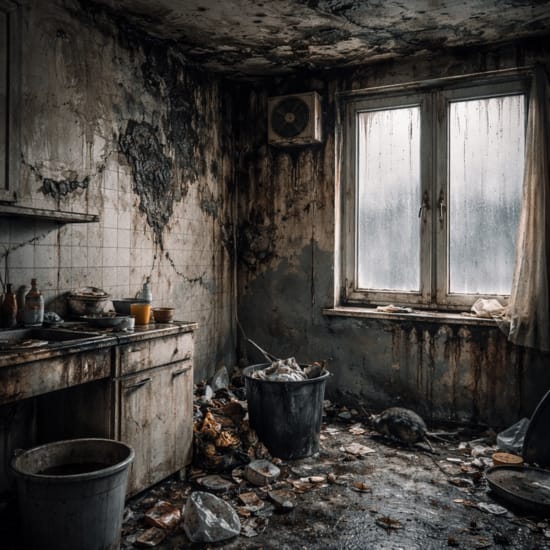
Definition & criteria of degraded or unfit housing
A home may be considered unfit or not compliant with housing standards when it presents a serious housing issue such as persistent humidity, mold, lack of ventilation, absence of hot water, pests, defective equipment or structural damage affecting the building.
The qualification depends on the seriousness of the problem, its duration, its impact on daily life, the general condition of the property offered for rent, and compliance with housing standards, proper maintenance and sanitation rules.
Common signs of an unsanitary home
1) Dampness, condensation, mold
- Black stains on walls and ceilings, musty odors, peeling wallpaper.
- Water dripping on windows, water infiltration, broken or absent ventilation systems.
- Possible effects: allergies, discomfort and negative impact on health.
2) Safety & installations
- Outdated electrical panels, burnt sockets or gas leaks represent immediate danger.
- Missing railings, unstable stairs or unsafe equipment can threaten occupant safety.
3) Pests & hygiene
- Pests such as cockroaches, bedbugs or rodents.
- These situations often reveal poor property management and lack of proper maintenance.
4) Space, equipment and ventilation
- Rooms without windows, lack of hot water, missing ventilation or broken equipment.
- Poor construction or old damage may worsen conditions over time.
Case management, insurance and responsibilities
Property maintenance and housing standards
- A property offered for rent must meet minimum housing standards.
- The owner must ensure proper maintenance and address structural damage.
- Poor management of a documented problem can worsen the situation.
Insurance and incident coverage
- In case of an incident, home insurance may help cover damages depending on the policy.
- Having proper insurance coverage and keeping evidence helps manage the case.
- Insurance companies may request reports, quotes or proof of repair work.
If the problem persists for a long time or conditions become unsafe or unfit, legal action may be considered.
What should you do?
- Document the problem: photos, mold, humidity, pests, structural damage and duration.
- Contact the landlord or property management with a written notice.
- Report the incident to your insurance company if relevant.
- Notify authorities if the issue persists.
- Request an inspection to evaluate housing safety and sanitation conditions.
FAQ — Signs of unsanitary housing
What are the common signs of an unsanitary home?
How can you detect mold inside an apartment?
What are the health effects of unsanitary housing?
Can legal action be taken?
Related resources
The service
Read next
- Unsanitary housing: how to report it to the town hall →
- FAQ – Unsanitary home cleaning: steps, products, safety & quotes →
- Aid & subsidies for unsanitary cleaning →
- Clear-out and disinfection after unsanitary conditions →
- Who should you contact in case of unsanitary housing ? →
- Health & Legal Risks of Unsanitary Housing : How to Act Fast →
Other situations
Request a free quote