FAQ – Unsanitary home cleaning: steps, products, safety & quotes
Everything you need to know about cleaning an unsanitary dwelling (house, apartment, home): disinfection, clear-out, health risks, assessment, professional intervention, quotes and best practices.
Definition Signs & assessment Cleaning steps Products & equipment Safety & risks When to call pros Detailed FAQ
What is an “unsanitary dwelling”?
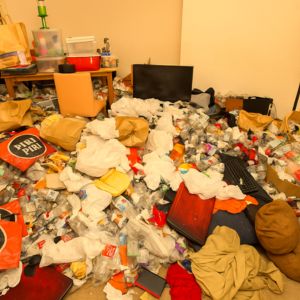
An unsanitary dwelling is a home whose condition endangers occupants’ health and safety: soiled walls and surfaces, mould, persistent odours, stagnant water, waste and accumulation of items (often linked to Diogenes syndrome), lack of cleanliness, poor control of contaminant agents. Proper cleaning requires a deep intervention with suitable sanitary products and strict management of flows (water, waste) and equipment.
Goal: restore a healthy, safe and durable living environment, whether in a house or an apartment.
Warning signs ( assessment )
- Mould on walls and surfaces, strong odours, humidity.
- Accumulation of items/waste, visible unsanitary state, depth of grime.
- Sanitary appliances unusable, stagnant water, damaged equipment.
- Health risks (biological agents), impact on indoor environment.
An initial assessment defines the process, intervention guide, priority zones and the quote.
Effective cleaning steps (house & apartment)
- Assessment of the home and securing high-risk zones.
- Clear-out (waste, items) with professionals, management & traceability.
- Deep cleaning of each room, surfaces, walls, sanitary areas.
- Disinfection (suitable sanitary agents), deodorization of persistent odours.
- Final control: hygiene, cleanliness and a healthy living environment.
This method covers the full process, including extreme cases (severe unsanitary state or Diogenes syndrome with heavy accumulation).
Products, equipment & use
Use certified products (virucidal/bactericidal), appropriate equipment (PPE, HEPA vacuums, steam cleaners), and follow a clear step-by-step guide. Disinfection agents are chosen according to surfaces, presence of mould, stagnant water and odours.
Objective: restore a healthy indoor environment and regain hygiene control in the home.
Safety & health risks
- Biological risks: infectious agents, mould, toxic odours.
- Sanitary: contact with polluted water, waste, airborne contamination.
- Trained professionals = reduced risk, more reliable process and healthy outcome.
Without experience, occupant safety may be compromised. In extreme cases, call an expert team.
When should you call professionals?
As soon as the home’s condition requires deep cleaning (heavy accumulation, unsanitary, persistent odours, degraded surfaces and walls, unusable sanitary areas) or in cases of Diogenes syndrome.
A clear quote specifies zones, process, products and waste management at home.
FAQ – Unsanitary home cleaning
How do I identify an unsanitary home?
Presence of mould, strong odours, waste, accumulation of items, unusable rooms, lack of hygiene (sanitary areas, water, surfaces, walls). A professional assessment confirms the unsanitary condition.
What are the key steps?
Assessment → clear-out & waste management → deep cleaning by zone → disinfection (sanitary products) → deodorization → final healthy check of the home.
Which products are recommended?
Certified products (virucidal, bactericidal, fungicidal) adapted to surfaces, walls, sanitary areas and odours. Agents are selected according to the environment, intended use and the planned process.
When should I call professionals?
In extreme situations, for an unsanitary home, a case of Diogenes syndrome (massive accumulation), or when safety/health of occupants is at stake. Professionals ensure cleanliness, hygiene and a healthy result.
How is a quote calculated?
Based on zones, the condition (unsanitary, depth of grime), the amount of waste/items, required products/equipment and intervention time. A transparent quote comes with a step-by-step guide.
Can I do it myself?
Strongly discouraged in extreme unsanitary cases: exposure to agents, mould, odours, lack of proper equipment and know-how. It’s safer to rely on professionals for a healthy home.
Clear-out, disinfection, deodorization and deep cleaning — nationwide.
Go further
Essential resources
 Main guide
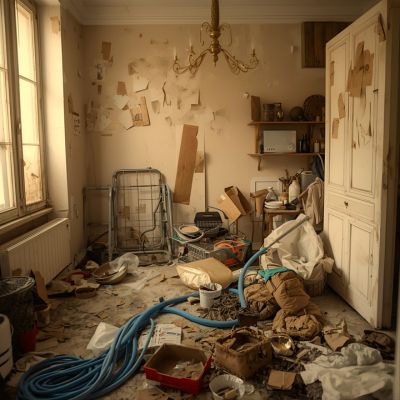
Cleaning unsanitary homes
Professional cleaning of extremely dirty or unfit housing.
Read the article → Understand
Before / After: rehabilitation examples
Real cases and photos proving Défi Clean’s effectiveness.
Read the article →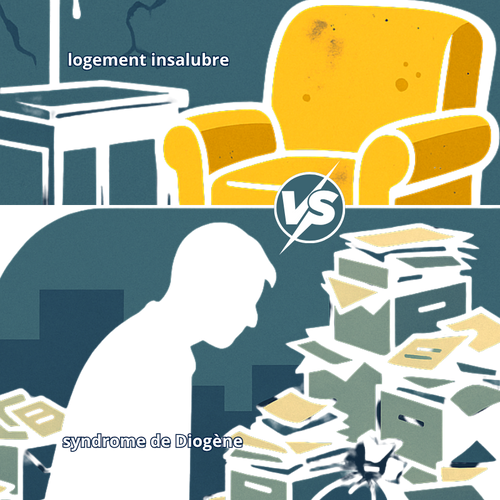
 Heads-up
Difference between unsanitary housing & Diogenes
Full comparison (symptoms, risks, treatments).
Read the article →