

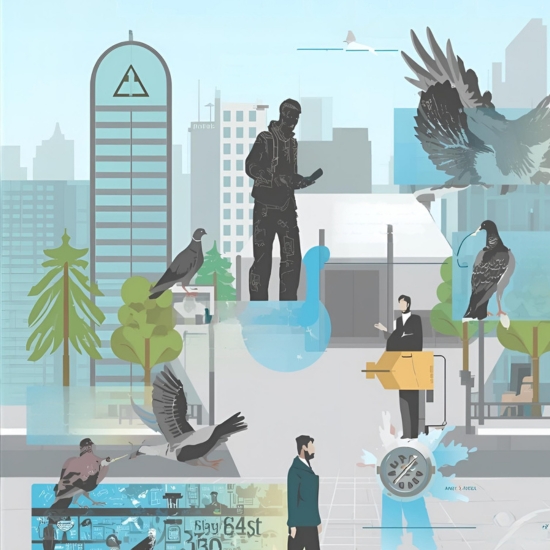
Why bird control is essential for public health
Bird control (dépigeonnage) is not just about nuisances: it is a major sanitary and safety issue for local authorities, public buildings, companies and private properties across France.
Understanding the risks: pigeons, droppings and proliferation
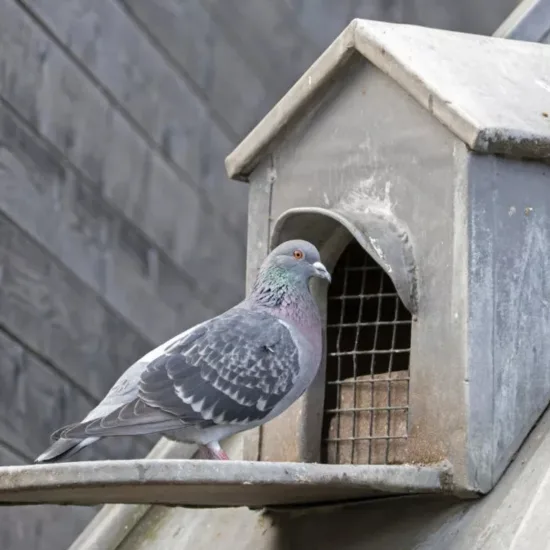
Pigeons create significant sanitary risks: their droppings cover structures, damage buildings, contaminate public areas and favour the proliferation of other birds and pests. Without appropriate solutions, the pigeon population grows quickly around roofs, ledges, façades and public places. Their droppings damage the environment, increase sanitary risks and can even threaten safety in and around buildings (slippery ground, corrosion, blocked gutters, etc.).
Bird control: methods, solutions & devices
Professional bird control (depigeonnage) relies on several complementary methods: spikes, nets, repellents, scare devices (effarouchement), acoustic devices, preventive interventions and sanitary cleaning. Every device is chosen according to the zones to be protected, the type of structures, the surrounding environment and the presence of protected species under French law. A professional intervention ensures full compliance with local and national regulations in France.
Health risks & public issues
Without bird control, pigeon droppings can lead to infections, the appearance of pests and the gradual degradation of structures. Local authorities, public spaces, companies and housing estates must apply strict hygiene, disinfection and safety measures. Professional teams provide complete sanitary cleaning, removal of droppings and disinfection to protect both buildings and the public.
French regulations & protection of species
In France, bird control (depigeonnage) is governed by strict regulations relating to birds and certain protected species. Any intervention must comply with the law, only use authorised devices, and protect both public health and the environment. Professional service providers handle the installation and maintenance of devices in full compliance with these rules.
Why work with a professional company?
Professional interventions provide an accurate diagnosis, tailored solutions, safe installation of devices, thorough cleaning and disinfection, as well as a clear quote (devis) and a responsible approach to the environment. This guarantees long-term results and limits the return of pigeons in sensitive areas.
Requesting a quote: an essential service
A detailed quote helps you understand the planned measures, chosen methods, zones of intervention, proposed solutions and future maintenance of installed devices. Défi Clean’s interventions are designed to protect health, hygiene, safety and full compliance with French regulations.
FAQ – Bird control, pigeons and public health
What are the main health risks linked to pigeons?
Pigeons can transmit bacteria, parasites and fungi through their droppings. They create sanitary risks in public areas and buildings, especially when the population becomes dense.
What are the most effective bird control methods?
Spikes, nets, visual and acoustic scare devices, repellents, as well as professional cleaning and disinfection. The choice depends on the building, the environment and the areas to protect.
Is bird control regulated in France?
Yes. Interventions must comply with French law, respect protected species and follow national and local regulations. Only authorised devices and methods can be used.
Why should I call a specialised company?
To guarantee hygiene, safety, correct installation of devices, compliance with regulations and long-term efficiency. A professional team also handles cleaning and disinfection.
Are bird control devices dangerous for birds?
No, when installed by professionals, devices such as spikes and nets are designed to keep pigeons away without injuring them, while respecting the environment.
How much does a bird control intervention cost?
The price depends on the size of the site, the number of structures to protect, the devices used and the level of cleaning and disinfection required. A quote details all these elements.
Why can a single pigeon become a problem?
A single pigeon can attract others, especially on ledges, roofs and public places. Over time, droppings accumulate, nuisances increase and the sanitary risk becomes significant.
How is pigeon management organised in public areas?
Local authorities combine several tools: limiting feeding, installing deterrent devices and running controlled scare campaigns. The goal is to limit the presence of pigeons and reduce nuisances.
Do pigeon droppings really represent a sanitary risk?
Yes. Droppings can contain pathogens that are dangerous for people who live, work or walk near contaminated structures. They also damage materials and surfaces.
What is “scare control” and when should it be used?
Scare control uses visual or acoustic signals to drive pigeons away without harming them. It is useful when the population rises quickly and nuisances become difficult to manage.
Why do pigeons always come back to the same place?
Pigeons return to places where they find food, shelter and safety. Without appropriate bird control solutions, they keep using the same buildings and public areas.
Can pigeons and other birds cause material damage?
Yes. Pigeons and other birds damage roofs, façades, balconies and gutters. Their droppings accelerate corrosion, infiltration and degradation of building materials.
Go further
 Main guide
Bird control & disinfection
The core guide: methods, cleaning, disinfection, prevention.
Read the article →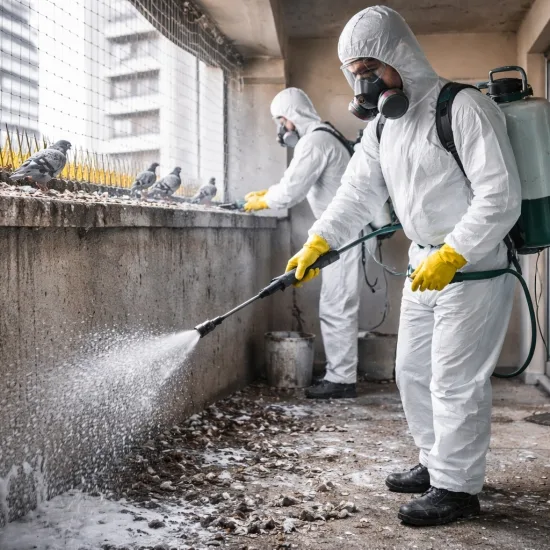 Protocol
Disinfection after proofing
Steps, safety, sanitation protocols and waste handling.
Read the article →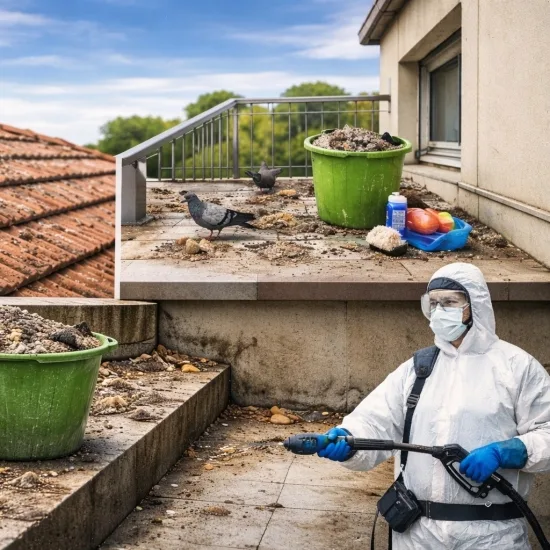 Practical
Related resources
The service
Read next
- FAQ – Professional Pigeon Control →
- Pigeon droppings cleaning on roof and balcony →
- Bird control for buildings and public properties →
- How to Prevent Reinfestation? →
- Disinfection after pigeon proofing: steps and protocols →
- Modern Pigeon Control Techniques (Nets, Spikes, Ultrasonic Systems) →
Other situations
Request a free quote