

Professional Bird Control Company: humane methods, anti-bird devices and safe cleaning
Birds and pigeons can quickly affect a property, a roof, open spaces, industrial buildings, food areas, façades and technical structures. A professional bird control company helps you understand the right methods, choose suitable anti-bird devices and keep your spaces clean, safe and protected.
Défi Clean provides information and services around bird proofing, pigeon control, netting, nets, mesh, spikes, laser deterrents, acoustic repeller systems, droppings cleaning and post-installation disinfection. The goal is simple: protect your property while respecting wildlife.
Why bird control matters for health, safety and property protection
Bird presence is not only an aesthetic issue. Pigeons and other birds may create nests, leave droppings, block gutters, damage structures, contaminate food areas and increase hygiene risks. In some locations, a few birds can quickly become a larger pest problem.
Effective bird control is about choosing the right solutions. Some areas need spikes. Others need netting, mesh, nets, visual deterrents, laser systems, acoustic devices or a combination of several methods.
What are the most effective bird control methods?
There is no single universal bird control method. The right choice depends on the type of property, the roof access, the level of pigeon activity, the open spaces, the nearby food sources, the buildings structure and the long-term protection goal.
Anti-bird spikes
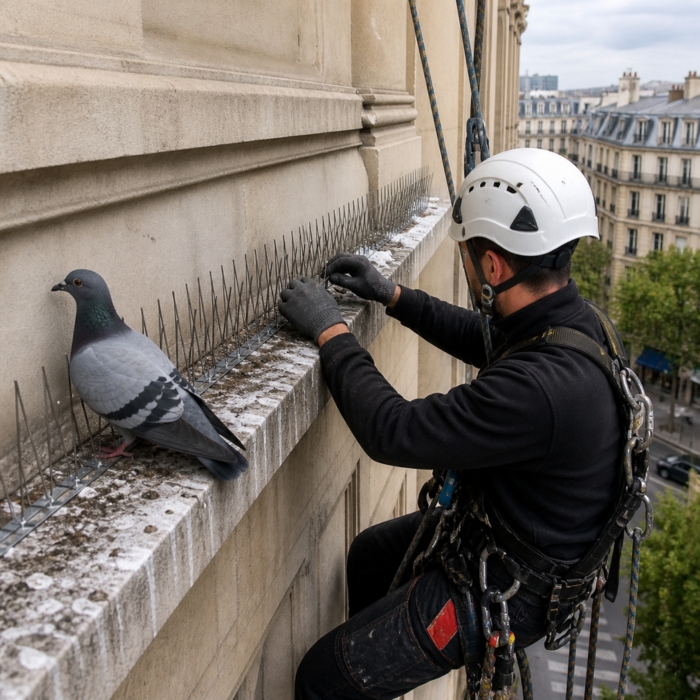
Spikes are common anti-bird devices. They help prevent pigeons from landing on ledges, signs, beams, roof edges and narrow surfaces.
Bird netting and nets
Netting, nets and mesh protect open areas, balconies, courtyards, industrial zones and roof spaces by blocking access without harming the birds.
Laser deterrent systems
Laser and visual systems may help move birds away from wide areas. They are often used where physical devices are not enough or not suitable.
Acoustic repellers
Acoustic repeller devices can support bird control in specific environments. Their effectiveness depends on the site, species, habits and surrounding noise.
Visual deterrents
Visual deterrents may be useful for some open spaces. They are often part of a broader protection plan rather than a standalone long-term solution.
Cleaning and disinfection
Bird droppings must be removed carefully. After cleaning, disinfection helps improve health, hygiene and safety.
Bird control methods compared
Each bird control option offers advantages and limits. The best solutions are often combined after a professional diagnosis.
Spikes
Best for: narrow ledges, signs, beams and roof edges.
Limit: not ideal for wide open spaces or complex structures.
Nets and mesh
Best for: balconies, courtyards, warehouses and industrial areas.
Limit: installation must be clean, tight and adapted to the structure.
Laser devices
Best for: larger sites, open roofs and wide outdoor spaces.
Limit: results depend on site layout, bird behavior and settings.
Acoustic systems
Best for: selected pest bird situations where sound deterrence is suitable.
Limit: birds may adapt if the system is poorly configured.
Visual systems
Best for: temporary pressure and specific visual deterrence.
Limit: rarely enough as the only protection method.
Cleaning and disinfection
Best for: removing droppings, reducing health risks and restoring hygiene.
Limit: cleaning alone does not prevent birds from returning.
Humane bird control: protect your property while respecting wildlife
A responsible bird control company should not only focus on moving birds away. It should also consider wildlife, local rules, nesting periods, site safety and humane practices. The aim is to protect your property without unnecessary harm.
Humane methods include exclusion netting, correctly installed spikes, well-positioned mesh, visual deterrents, site maintenance, food source reduction and safe cleaning. These methods help manage bird populations while reducing risks for people, buildings and the birds themselves.
What steps should you take after bird proofing?
Installing anti-bird devices is only one part of the job. After bird proofing, cleaning and hygiene are essential. Bird droppings can remain on ledges, roofs, walls, gutters, industrial surfaces and open spaces.
1. Inspect the protected areas
Check the roof, ledges, buildings, open spaces and protected structures. Make sure nets, mesh or spikes are correctly installed.
2. Remove droppings carefully
Bird droppings should be removed using safe methods. Dry scraping without protection can create airborne particles and increase health risks.
3. Clean and disinfect surfaces
After cleaning, disinfection helps restore hygiene, reduce contamination and make the area safer for users, clients, workers and visitors.
4. Maintain the protection system
Bird control systems should be checked over the long term. Weather, wind, dust, wildlife activity and building movement can affect performance.
Bird control for property, roof, food and industrial areas
Bird activity can affect many types of property. Residential buildings may need pigeon spikes or balcony netting. Industrial areas may need mesh, nets, laser devices or acoustic repellers. Food-related spaces need special attention because hygiene and health standards are critical.
Residential buildings
Protection for balconies, ledges, roofs, windows, open shafts and common spaces.
Industrial structures
Bird control for warehouses, open roofs, technical areas, beams and large structures.
Food-sensitive areas
Solutions designed to reduce contamination risks and support clean, safer spaces.
Need help choosing the right bird control solution?
If you are unsure which bird control systems are suitable for your property, contact Défi Clean. We can help you understand the most appropriate methods: spikes, nets, mesh, netting, laser devices, acoustic repellers, cleaning and disinfection.
Share information about your roof, building, open spaces, bird activity, pigeon droppings, access conditions and safety constraints. A clear diagnosis helps choose a safer, more durable and more humane solution.
Contact form
Send your request and describe the area to protect. Photos can help identify the right bird control method.
Frequently asked questions about professional bird control
What are the most effective bird control methods?
The most effective methods depend on the site. Common options include anti-bird spikes, netting, nets, mesh, laser devices, acoustic repellers, visual deterrents, cleaning and disinfection.
How can I prevent birds from returning to my property?
Start with a diagnosis. Remove food sources where possible, clean droppings, block access to nesting areas, install suitable devices and maintain the system over time.
Are bird spikes safe and humane?
When correctly installed, spikes are designed to prevent birds from landing, not to trap them. They are considered a humane deterrent when used properly.
When should I choose bird netting?
Bird netting is suitable for open areas, balconies, courtyards, roofs, warehouses and structures where birds need to be physically excluded from the space.
Do laser or acoustic repeller devices always work?
Not always. Laser and acoustic devices can be useful, but their effectiveness depends on the species, site layout, behavior patterns and correct setup.
Why is disinfection important after bird proofing?
Bird droppings can leave contamination on surfaces. After cleaning, disinfection helps reduce health risks, improve hygiene and make the space safer for people.
Can bird control be environmentally friendly?
Yes. Humane bird control focuses on exclusion, prevention, cleaning, food source management and wildlife-respecting methods rather than harmful actions.
Protect your property with safe, humane and durable bird control methods
Défi Clean helps you understand and choose the right protection: spikes, nets, mesh, netting, laser systems, acoustic repellers, droppings cleaning and disinfection.