

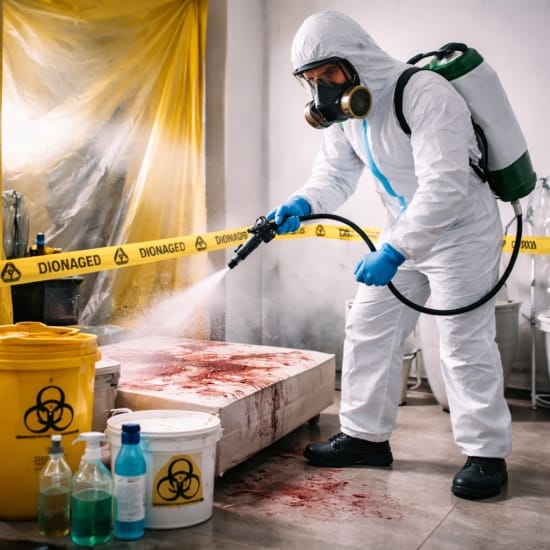
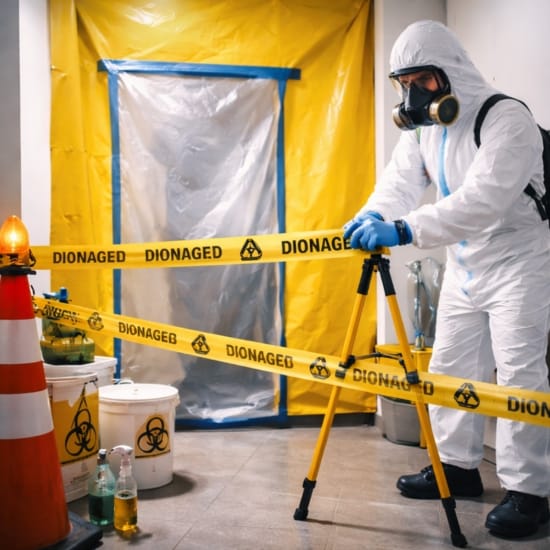
Biological decontamination: PPE technician and disinfection of a contaminated area
Biological decontamination involves treating contaminated areas affected by blood,
bodily fluids, bacteria or viruses.
To reduce the risks of contamination and protect personnel,
strict safety, protection and hygiene measures are applied.
biosafety
PPE
disinfection
France
Discreet intervention, unmarked vehicles, and a human approach for sensitive situations.
explain biological risks, prevention measures, and laboratory-style protocols
used to secure an intervention and restore a place to a safe condition.
1) Definition: biological risks and contamination
Biological risks refer to exposure to biological agents (viruses, bacteria, fungi,
microorganisms) that may be present in bodily fluids.
Without proper protocols, these agents can become a reservoir of contamination for the environment,
premises, facilities, and equipment.
Examples of situations
- Suicide cleanup (blood / bodily fluids)
- After death (decomposition, odours, contamination)
- Sensitive scene (assault, accident)
- Severely degraded home (hygiene issues, potentially present agents)
Exposure routes
- Direct contact (skin, mucous membranes)
- Projection / splashes
- Cross-contamination (objects, clothing)
- Possible aerosols depending on actions and surface type
“Visually clean” is not enough: the goal is real, lasting safety, measured through professional practices.
2) Safety measures and personnel protection
The priority during any decontamination intervention is the protection of personnel and the reduction of risks.
Professionals implement protective barriers, control the area, and follow a strict best-practice protocol.
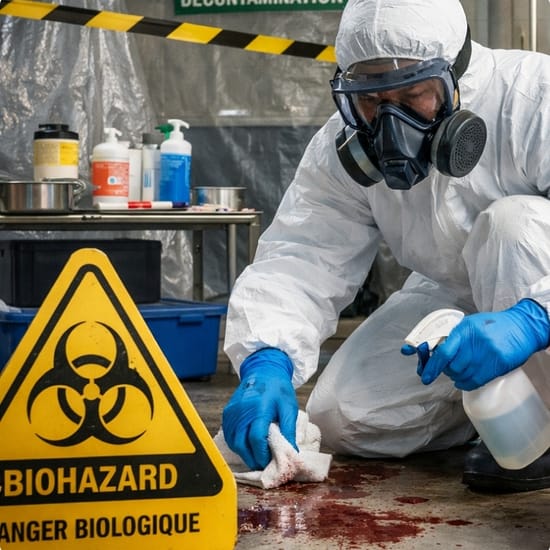
Personal Protective Equipment (PPE)
| Equipment | Purpose |
|---|---|
| Gloves | Limit the risk of direct contact and contamination. |
| Protective suit / clothing | Protect clothing and prevent cross-contamination. |
| Respiratory protection | Reduce exposure depending on the risk assessment. |
| Eye / face protection | Prevent splashes and projections. |
| Barriers / secured zone | Prevent contamination from spreading to “clean” areas. |
PPE and safety measures depend on the level of contamination, the surfaces involved, and the configuration of the premises.
3) Laboratory-inspired safety protocols
Certain biosafety practices used in laboratories
are applied in professional decontamination services.
- Initial risk assessment
- Controlled access and containment zones
- Strict PPE use and hygiene procedures
- Selection of professional disinfectants
- Controlled equipment and waste handling
4) Steps of a biological decontamination intervention
Operational process
- 1. Risk assessment of the contaminated area
- 2. Installation of containment barriers
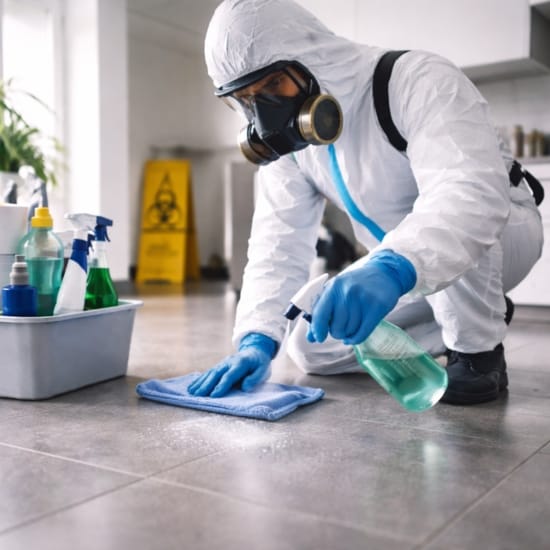
- 3. Biological decontamination of surfaces
- 4. Targeted professional disinfection
- 5. Safe biohazard waste disposal
- 6. Final verification and sanitation control
Benefits
- Professional intervention
- Strict safety protocols
- Sanitary restoration of the premises
- Advice for reoccupation or renovation
5) Training, best practices and compliance
Teams receive training to manage biological risks, use equipment,
apply proper measures, and follow safety procedures.
- Best hygiene practices and management of protective clothing / garments
- Product handling procedures and compliance with contact times
- Waste management and direction to appropriate services
- Reduction of cross-contamination risks
The goal is to protect the health of both teams and occupants, and to secure the premises over the long term.
Images (examples) — intervention & safety
How much does biological decontamination cost?
The cost depends on several factors:
- Surface area to be treated
- Level of biological contamination
- Accessibility of the location
- Time required for the intervention
FAQ — Biological Decontamination
What is a contaminated area?
A contaminated area contains biological agents such as blood, bacteria, viruses or bodily fluids that may present health risks.
Is decontamination just cleaning?
No. It involves risk assessment, PPE, containment barriers, specialized disinfectants and safe waste disposal.
What PPE do technicians use?
Depending on the situation: gloves, protective suits, respirators and face protection.
Do you operate across France?
Yes, Défi Clean operates nationwide with regional teams.
What Is Biological Decontamination?
Biological decontamination is the process of eliminating harmful microorganisms — bacteria, viruses, fungi, and other pathogens — from surfaces, air, and materials in a contaminated environment. Unlike standard disinfection, biological decontamination requires specialized equipment, certified professional-grade agents, and trained technicians to ensure complete elimination of biological hazards.
Défi Clean provides professional biological decontamination services throughout France, responding to a wide range of situations from post-COVID sanitation to infectious disease outbreaks, laboratory accidents, and crime scenes.
When Is Biological Decontamination Required?
Post-COVID and infectious disease sanitation: Buildings, offices, public spaces, and vehicles that have been exposed to a confirmed COVID-19 or other infectious disease case may require professional decontamination to ensure safe re-occupation.
After a death or trauma: Blood and biological fluids carry dangerous pathogens including hepatitis B, hepatitis C, and HIV. These pathogens can remain infectious on surfaces for extended periods and require specific professional treatment for safe elimination.
Mold and fungal contamination: Severe mold infestations — particularly those involving dangerous species such as Stachybotrys (black mold) — require professional decontamination to protect occupants’ health. Standard cleaning is insufficient and may even spread mold spores.
Animal infestations: Rodent, bat, or bird infestations leave behind fecal matter and urine containing hazardous pathogens including hantavirus, leptospirosis, and histoplasmosis. Complete decontamination is required following pest control intervention.
Laboratory or industrial incidents: Accidental spills of biological agents or infectious materials in professional settings require immediate expert response.
Our Decontamination Methods
Chemical disinfection: Application of virucidal, bactericidal, and fungicidal agents approved for professional biohazard use. We select products appropriate to the specific pathogen(s) present and the surfaces being treated.
Hydrogen peroxide vapor (HPV) or dry mist fogging: For spaces that require comprehensive air and surface treatment, HPV is highly effective — penetrating all areas of a room including hard-to-reach surfaces and HVAC systems.
Ozone treatment: Particularly effective for pathogen elimination and odor control, ozone treatment is used in combination with other methods for severe contamination cases.
UV-C irradiation: Ultraviolet germicidal irradiation is used as a complementary method to eliminate airborne pathogens and surface contamination on hard surfaces.
Certification and Documentation
Every biological decontamination intervention by Défi Clean concludes with a written certification confirming the methods used, the products applied, and the results achieved. This certificate is recognized by health authorities, employers, insurers, and real estate professionals. In cases involving notifiable diseases or public health implications, we coordinate with local health authorities (ARS) as required by French law.
Emergency Response
Biological contamination situations are, by their nature, urgent. Our teams are available 24 hours a day, 7 days a week, and aim to be on-site within 2 to 4 hours anywhere in Île-de-France. Free estimates are provided within minutes by phone for emergency situations. Contact us now for immediate assistance.