

Suicide Cleanup: Biological Safety Protocols
Suicide cleanup requires strict safety, protection, and decontamination procedures. Biological fluids may contain hazardous biological agents and create risks of contamination for personnel.
For this reason, professionals rely on protocols inspired by laboratory standards and biological safety practices.
1. Defining Biological Risks
Biological risks refer to exposure to pathogenic agents found in bodily fluids or human tissue.
- viruses
- bacteria
- fungi
- microorganisms
These biological agents can contaminate the environment, equipment, and premises if procedures are not followed correctly.
2. Safety Measures and Protection
Cleanup operations follow strict safety measures to limit exposure and protect the team’s health.
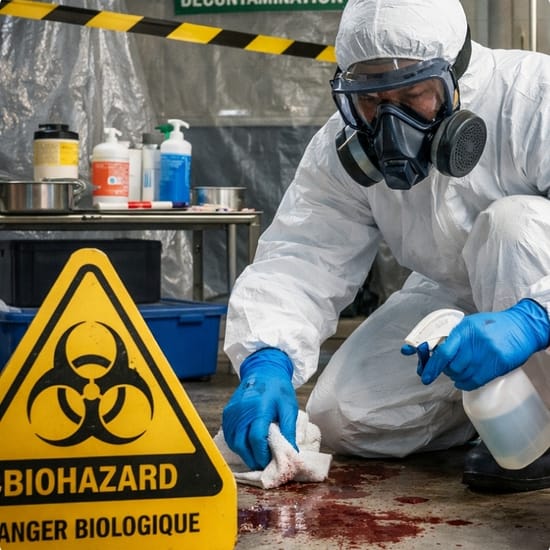
Protective Equipment (PPE)
- protective gloves
- biological protective suits
- respiratory masks
- protective eyewear
- specialized protective clothing
These equipment items create barriers against biological agents and reduce contamination risk.
3. Protocols Inspired by BSL-3 Laboratories
Some decontamination protocols are inspired by high-level biological safety standards used in specialized laboratories.
- access control to facilities
- mandatory PPE use
- management of biological waste
- surface cleaning with dedicated products
- disinfection of equipment
These practices help reduce risks of contamination.
4. Intervention Procedure
Each operation follows multiple steps.
- risk assessment
- implementation of protection measures
- decontamination of contaminated surfaces
- treatment of potentially impacted items
- safe handling and disposal of biological waste
Special attention is paid to hygiene, staff protective clothing, and full compliance with health and safety rules.
5. Training and Professional Oversight
Teams receive dedicated training on biological risks and decontamination methods.
- risk evaluation and planning
- proper use of equipment
- safety procedures and checklists
- managing high-risk situations
The goal is to ensure the safety of personnel, occupants, and the surrounding environment.
6. Biological Safety: Risk Management and Personnel Protection
During suicide cleanup, safety and protection of personnel are absolute priorities. Biological fluids may contain pathogenic agents and create serious risks of contamination. This is why strict biological safety measures are required.
In sensitive scenarios, procedures can be inspired by laboratory protocols used in specialized laboratories handling potentially hazardous biological reservoirs. These protocols rely on professional practices and appropriate staff training.
Essential Protection Measures
- mandatory use of gloves and PPE
- protective clothing and full protective gear
- implementation of safety barriers
- strict hygiene practices
- systematic risk assessment before any action
- safe use and handling of products for decontamination
In specific controlled settings, a decontamination shower process may be used to further reduce biological risks. Equipment and installations should be checked regularly to maintain a high level of safety and protection for professionals.
Conclusion
Suicide cleanup requires a professional approach based on biological safety protocols.
Thanks to dedicated equipment, robust protection measures, and procedures inspired by high-standard laboratories, professionals can reduce contamination risks and restore a safe and healthy environment.
Glossary of Biological Safety Protocols
- Biological safety: a set of rules designed to reduce biological risks.
- PPE: personal protective equipment used by personnel.
- Decontamination: the process of eliminating biological agents.
- Hygiene: measures intended to prevent contamination.
- Laboratory: a controlled environment where biological agents are handled.
- Biological level: a safety classification system (BSL levels).
- Protective barriers: systems that limit the spread of pathogens.
- Risk assessment: an evaluation carried out before the intervention.
FAQ — Suicide Cleanup and Biological Safety
What are the biological risks during a suicide cleanup?
The main biological risks come from blood, bodily fluids, and tissues that may contain pathogenic biological agents. Without proper safety measures, these materials can contaminate the environment and expose personnel to serious health hazards.
What protective equipment do professionals use?
Teams use PPE such as gloves, protective suits, respiratory masks, goggles, and specialized clothing. These create barriers against biological agents and reduce risks of exposure.
What is biological decontamination?
Decontamination is the process of removing or neutralizing hazardous biological agents after a traumatic event. It involves dedicated products, strict hygiene rules, and defined biological safety protocols.
Why should suicide cleanup be performed by professionals?
Professionals have the right training, equipment, and protocols to manage biological risks. They apply strict safety and protection procedures to prevent contamination.
Which protocols are inspired by biological laboratories?
Some interventions rely on approaches similar to high-level laboratory protocols, including strict risk assessment, mandatory PPE, controlled work zones, and rigorous decontamination steps.
How does a biological cleanup intervention work?
The process follows key steps: risk assessment, implementation of protection measures, decontamination of affected surfaces, treatment of items, and secure handling of biological waste.
Do insurers cover suicide cleanup?
In some cases, home insurance may cover part of the cleanup after a traumatic event. It is recommended to check your policy terms and request a quote from a specialized company.
How much does suicide cleanup cost?
Costs depend on the treated surface, the level of contamination, the duration of the work, and the required equipment. A tailored quote is usually provided after an on-site evaluation.
Related resources
The service
Read next
Other situations
- Suicide cleanup services →
- Death cleanup services →
- Guide: cleaning up after a death →
- Unsanitary house cleaning →
- Our work: before & after →